


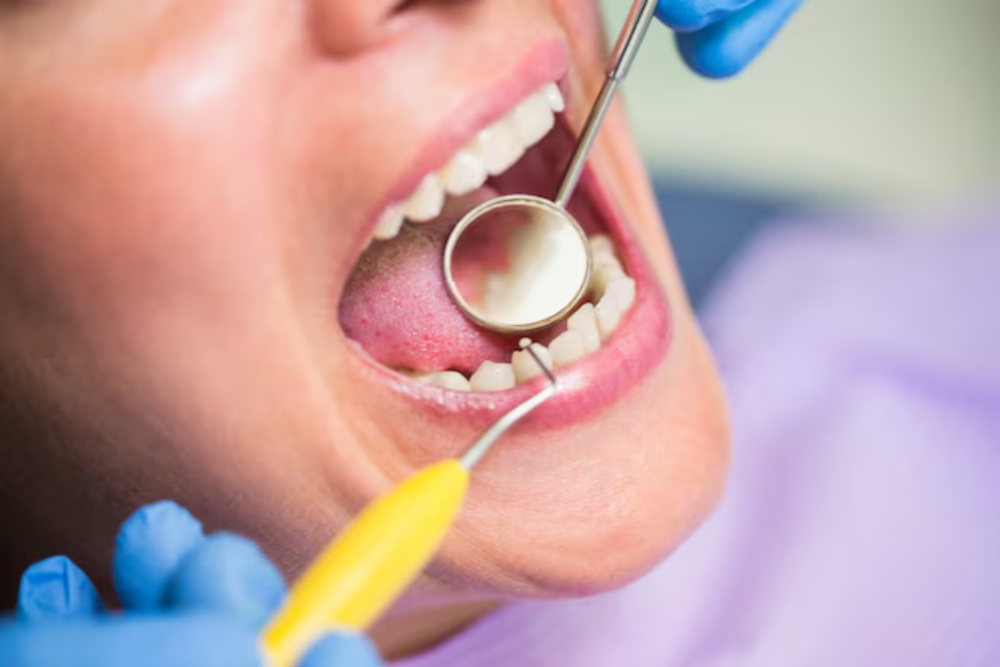
Gum disease often starts with small signs that are easy to miss. Your gums may look red, bleed when you brush, or hurt when you eat. These signs may mean plaque is building up near your gums. Plaque is a sticky layer of bacteria that forms on your teeth every day. If you do not clean it away, it can harm your gums and cause gum disease. Knowing the early signs of gum disease can help you get treatment before it gets worse. Brush your teeth daily, clean between your teeth, and visit a dentist near you regularly. Do not wait for your gums to hurt before getting them checked. Noticing changes in your gums early can help protect your teeth.
What Are the First Signs of Gum Disease?
Healthy gums are usually firm and fit closely around the teeth. Early gum disease, also called gingivitis, can cause changes in how your gums look and feel.
Look for these common signs:
- Bleeding gums: Your gums bleed when you brush or floss.
- Red or swollen gums: Your gums look red or puffy.
- Sore gums: Your gums hurt when you brush or eat.
- Bad breath: Your breath smells bad even after brushing.
- Changes in your gums: Your gums look different around some teeth.
If you notice any of these signs, visit your dentist. Early treatment can help prevent gum problems from worsening.
What Does Stage 1 Gum Disease Look Like?
The earliest stage is usually gingivitis. Gums may look red, swollen, or shiny, and they may bleed during brushing. You may not feel any pain, which makes the problem easy to overlook.
At this stage, the gums are swollen, but the bone that holds your teeth is not damaged by gingivitis itself. A professional dental cleaning, along with daily brushing and flossing, can often help the gums return to a healthy state.
Gum disease treatment in Kitchener may include a professional cleaning to remove plaque and hardened buildup that brushing cannot remove. A dental professional can also show you how to clean along the gumline and between your teeth.
What Causes Gum Disease to Start?
The main cause is plaque buildup around the teeth and gums. When plaque is not removed regularly, it can irritate the gums. Over time, it may harden into tartar, which needs professional removal.
Other factors can increase the risk, including:
- Smoking or using tobacco.
- Poorly controlled diabetes.
- Some medicines that affect saliva or gum tissue.
- Changes in hormone levels.
- Difficulty cleaning around crowded teeth or dental appliances.
Regular dental visits help identify buildup and gum changes before they become harder to manage.
Can Gum Disease Affect Your Teeth?
Yes. If gum disease progresses beyond gingivitis, it can damage the tissues and bone that support your teeth. The gums may pull away from the teeth, creating spaces where bacteria collect. Over time, teeth may become loose, and some may eventually be lost.
A dentist in Kitchener can check your gums, measure the spaces around your teeth, and look for signs of damage. Treatment depends on how far the disease has progressed. Early gum inflammation may improve with professional cleaning and daily care, while more advanced disease may need deeper cleaning or other treatment.
What Clears Up Gum Disease?
The answer depends on its stage. Early gingivitis can often be reversed by removing plaque and tartar and improving daily cleaning. Once gum disease has damaged the bone supporting the teeth, that damage usually cannot be fully reversed, although treatment can help control the disease.
Helpful steps include:
- Brush twice daily with a soft-bristled toothbrush.
- Clean between your teeth every day.
- Have professional cleanings as recommended.
- Avoid tobacco.
- Follow your dental professional’s care instructions.
Gum Disease Treatment in Kitchener can help manage the condition and protect the tissues that support your teeth.
Take Action to Protect Your Gum Health
Early gum disease is easier to manage when you recognize the signs and seek care promptly. Laurentian Dental Centre can assess your gum health, explain suitable treatment options, and help you build a daily care routine. Book an appointment to take the next step toward healthier gums.
FAQs
Will gum disease go away by itself?
No. Gum inflammation usually needs better plaque removal and, when needed, professional cleaning. Waiting may allow the problem to worsen.
Can gums bleed even if there is no pain?
Yes. Early gum disease can cause bleeding without pain. Gums that bleed often should be checked rather than ignored.
Is bad breath always a sign of gum disease?
No. Bad breath can have several causes, including dry mouth, food, and other oral health problems. If it continues despite good cleaning, arrange a dental checkup.
Can brushing too hard cause bleeding gums?
Yes. Brushing too hard can hurt your gums and make them bleed. Use a soft toothbrush and brush gently. If your gums keep bleeding, see your dentist, as there may be another cause.