


Oral cancer is often linked to smoking and drinking too much alcohol. However, these are not the only causes. Some types of human papillomavirus (HPV) can also cause cancer in the back of the throat, including the tonsils and the base of the tongue. This is one reason why younger adults who do not smoke can also develop throat cancer. HPV-related throat cancer may not show clear signs in the early stages. Knowing the warning signs and getting regular dental checkups are important. Dental visits allow your dentist to check for unusual changes in your mouth. However, a regular dental checkup cannot find every cancer that develops deep in the throat.
How Is HPV Linked to Throat Cancer?
HPV is a common virus that spreads mainly through intimate skin-to-skin contact, including oral sexual contact. Most HPV infections clear on their own. However, some high-risk types can remain in the body for many years and cause cell changes that may eventually lead to cancer.
Oropharyngeal cancer HPV cases involve cancer in areas such as:
- The tonsils
- The base of the tongue
- The soft part at the back of the roof of the mouth
- The back and side walls of the throat
Cancer linked to HPV may take years to develop after an infection. A diagnosis does not mean the infection is recent or that symptoms would have appeared soon after exposure.
Why Are Younger Non-Smokers Being Diagnosed?
Smoking and heavy alcohol use remain important risk factors for many mouth and throat cancers. However, HPV has changed the pattern of some throat cancer diagnoses.
HPV-related oropharyngeal cancer can affect people who have never smoked or used tobacco. It is also seen more often in men than women. This does not mean every younger person with a throat problem has cancer. Most throat lumps and infections have other causes.
The important point is that a lack of smoking history does not remove the risk of HPV-related throat cancer. A dentist in Kitchener can check visible areas of the mouth during a routine examination and help identify changes that need further assessment.
What Does an Oral Cancer Screening Check?
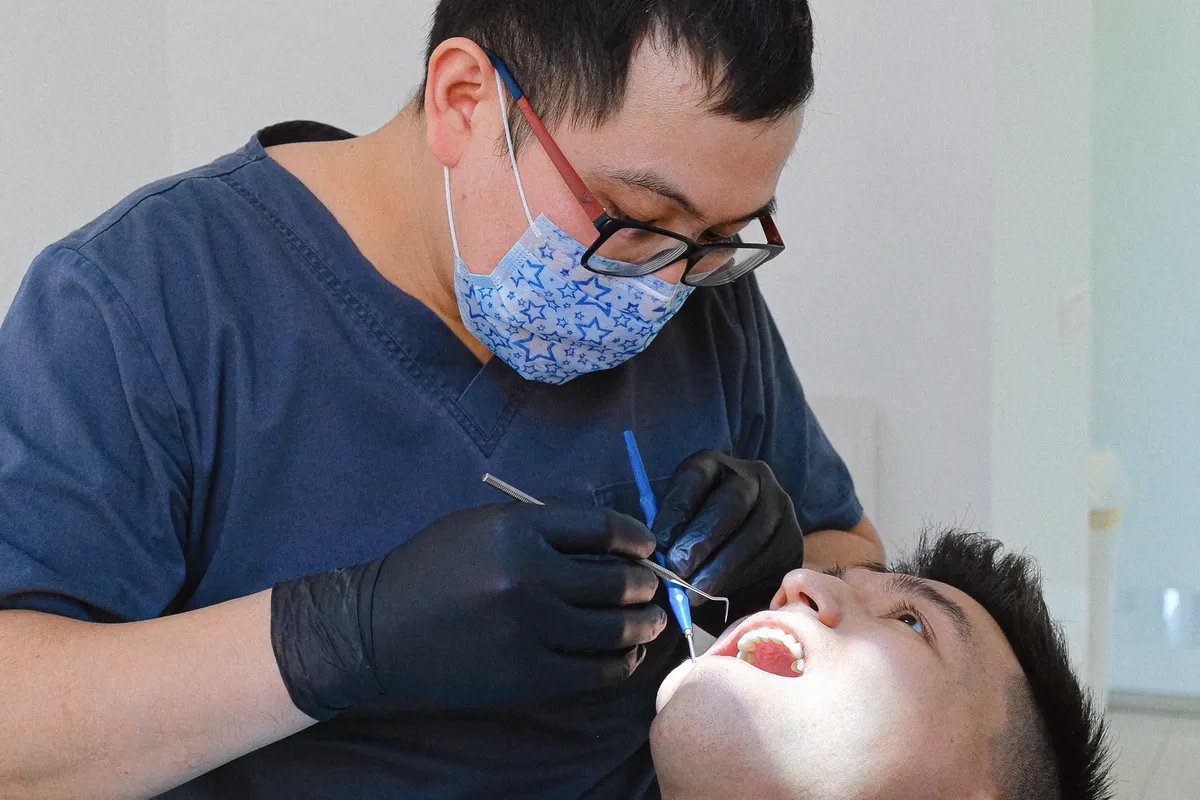
Oral cancer screening in Kitchener generally involves a visual and physical examination of the mouth. The goal is to look for unusual changes that may need closer attention.
During an examination, the dental professional may check:
- The lips, gums, and inside of the cheeks
- The tongue, including its sides and underside
- The roof and floor of the mouth
- Red or white patches, sores, or unusual tissue changes
- The neck and jaw area for unusual lumps or swelling
If an unusual area is found, further testing or a referral may be needed. A biopsy, which involves taking a small tissue sample, may be used to find out whether the cells are cancerous.
It is important to know that there is no regular, approved test to check for HPV-related cancer deep in the throat. A dental oral cancer check can find changes in the visible parts of your mouth, but it cannot detect or rule out all cancers in the deeper parts of your throat.
Which Warning Signs Should Not Be Ignored?
Some early changes may be painless. Arrange a medical or dental assessment if you notice:
- A sore in the mouth that does not heal
- A red or white patch that remains
- A lump in the neck or throat
- Ongoing pain or difficulty when swallowing
- A lasting sore throat or earache
- A hoarse voice that does not improve
- Unexplained weight loss
A throat lump can have several causes, including swollen lymph nodes from an infection. However, a lump that remains or grows should be checked rather than ignored. A dentist near you can examine the mouth, while a doctor or ear, nose, and throat specialist may need to assess deeper throat symptoms.
Can the HPV Vaccine Help Prevent Oral Cancer?
The HPV vaccine protects against several types of HPV that can cause cancer, including some types linked to oropharyngeal cancer. This is why HPV vaccine oral cancer prevention is an important topic for families and young adults.
Keep these points in mind:
- Vaccination works best before a person is exposed to HPV.
- It is recommended for children at the age advised by local health guidelines.
- Catch-up vaccination may be available for eligible older teens and adults.
- The vaccine prevents new infections but does not treat an existing HPV infection or cancer.
- Ask a healthcare provider about the recommended vaccine schedule and eligibility.
Stay Informed About Your Oral Health!
Changes in your mouth or throat should not be ignored, even if they do not hurt. Contact Laurentian Dental Centre to book a dental checkup and talk about any concerns. Regular dental visits can help check your mouth and find any changes that may need further attention.
FAQs
Can HPV cause throat cancer in someone who does not smoke?
Yes. Some types of HPV can cause cancer in the tonsils and the back of the tongue. A person can develop HPV-related throat cancer even if they have never smoked.
Does an oral cancer screening detect HPV?
No. A routine oral examination looks for unusual changes in the mouth. It does not test for HPV or reliably detect cancer deeper in the throat. There is currently no standard routine HPV screening test for throat cancer.
Does having HPV mean you will get cancer?
No. Most HPV infections go away on their own without causing any problems. Only a few HPV infections that stay in the body for many years can lead to cancer.
Can the HPV vaccine help prevent throat cancer?
Yes. The HPV vaccine protects against certain types of HPV that can cause throat cancer. It helps prevent new HPV infections but cannot treat an infection that you already have.